
Reproductive and Perinatal Psychiatry with over two decades of midwifery expertise
When your body is changing, your medication questions deserve more than a shrug and a risk category.
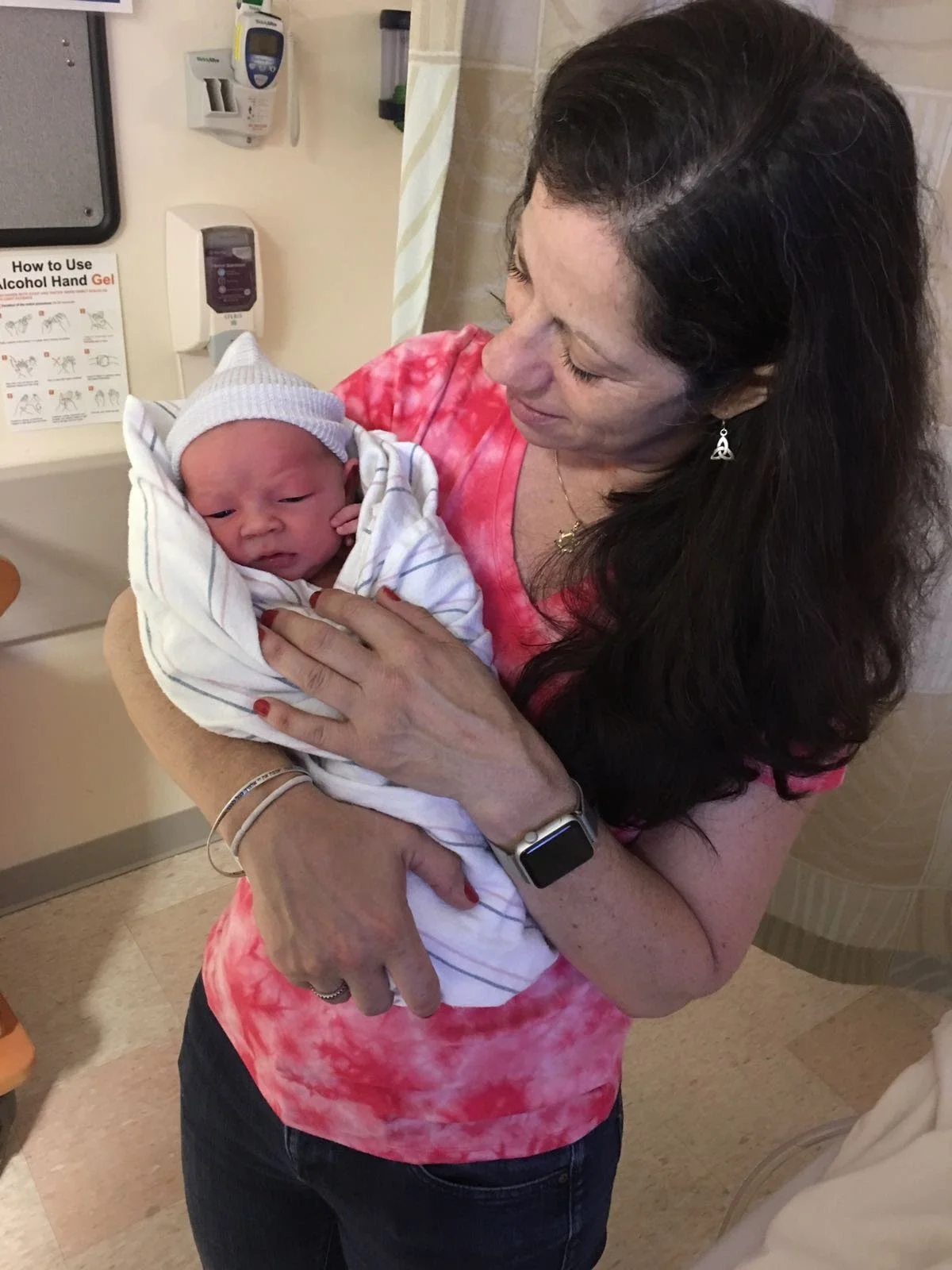
With my grandson, Henry.
If you have ever asked a prescriber whether it was safe to stay on your medication during pregnancy, you probably got one of two answers. Stop everything. Or a vague risk category and a decision dropped back in your lap.
Neither is good enough. You should not have to choose between your mental health and your pregnancy. And you should not have to make that choice in the dark, or with someone who is guessing.
What makes my care different?
I am a board certified psychiatric nurse practitioner. I am also a certified nurse midwife, and I have spent decades caring for women through pregnancy, birth, and the disorienting weeks that follow.
Being a midwife changes everything about how I prescribe. I understand what your body is actually doing through these transitions: the hormones, the sleep that disappears, the shifts that ripple straight into your mood. So when we sit down to talk about medication, I am not reading a risk label off a chart and handing you the worry. I am weighing the decision with you, with the whole physiology in front of me.
And I lean toward less, not more. My aim is the lowest effective dose, the simplest regimen that actually does the job, and a careful untangling of whatever has been piled on over the years. When what you take can reach more than one person, restraint is not caution for its own sake. It is the entire point.
Where I can help

Reproductive mental health is not one moment. It runs the length of your life, and I work across all of it:
Trying to conceive. Planning the safest medication strategy before you are pregnant, so you are not scrambling later.
Pregnancy. Depression, anxiety, and OCD during pregnancy, and the real question underneath them: continue, adjust, or change what you are taking.
Postpartum. Postpartum depression, postpartum anxiety, postpartum OCD, and help telling the difference between the baby blues and something that needs more.
Breastfeeding. Medication choices that fit with nursing, decided with current lactation data, not folklore.
Pregnancy and infant loss. The grief, and the mental health that can follow it.
PMDD. Premenstrual dysphoric disorder, when the days before your period upend your life.
Perimenopause and menopause. Mood and anxiety changes tied to the hormonal shift, taken seriously instead of waved off.
What working with me is actually like
This is concierge care, in the way that word should actually mean, and without the price tag people expect from it.
You see me. Every time. Not a rotating fellow, not a new face at every visit. The same prescriber who knows your history.
Unhurried visits, and you can reach me between them. These decisions are too important to rush through fifteen minutes.
Fees kept in a range real people can manage. Care this personal should not be reserved for the few.
More than three decades of clinical experience behind every recommendation I make.
Frequently Asked Questions
Is it safe to take psychiatric medication during pregnancy? For many women, yes, and for many, staying on the right medication is safer than stopping it. There is no single answer, which is exactly why this is a conversation, weighed with your history and your physiology, not a yes or no off a chart.
What about while breastfeeding? Many psychiatric medications are compatible with nursing. I help you choose based on current lactation data so you do not have to pick between your treatment and feeding your baby.
Should I stop my medication before trying to conceive? Not without a plan. Stopping abruptly can do real harm. The better move is to plan ahead, before you are pregnant, so you go in steady.
Do you treat PMDD? Yes. If the week or two before your period reliably upends you, that is one to two weeks of every month, a real chunk of your life, spent feeling unlike yourself. You are not imagining it, and you do not have to just live with it. PMDD is real and treatable, and I can help.
Do you treat perimenopausal mood changes? Yes. If the years around menopause have left you feeling like a stranger to yourself, you are not making it up, and these shifts are too often dismissed. They are real, they are treatable, and you can feel like yourself again.
Can we meet virtually? Yes. I offer telehealth across New Jersey, New York, and Maryland, with in person visits in Caldwell and Saddle River, New Jersey.